

Most small business owners find out about a coverage gap the same way: a claim gets denied, or a client sends back a certificate of insurance with a note that says “this doesn’t meet our requirements.”
Neither is a good day.
The frustrating part is that gaps are rarely the result of a bad decision. They are the result of a policy that was right in year one and never got revisited. You bought coverage when you had three employees and one van. Now you have eleven employees, four vans, a customer database, and a contract with a hospital system that has insurance requirements running four pages long. The policy did not change. Everything around it did.
Below are the ten gaps we find most often when we review an existing small business policy. Work through them with your declarations page in front of you. Most business owners find at least two.
1. No cyber liability coverage at all
This is the most common gap, and it is the one most likely to be an existential problem rather than an inconvenience.
A general liability policy covers bodily injury and property damage. A data breach is neither. If a client’s information is exposed, or an employee clicks a link and your systems get encrypted, your GL policy is very likely silent. Many policies now carry an explicit cyber exclusion so there is no ambiguity about it.
Standalone cyber policies for small businesses are usually far cheaper than owners expect, and the useful part is often not the payout but the incident response: the forensics firm, the breach notification service, and the negotiation help you get on day one.
Check for: a separate cyber policy or a cyber endorsement with its own limit. If you cannot find one, you do not have it.
2. Business interruption limits that were set years ago
Business interruption coverage replaces lost income while you are shut down after a covered loss. The limit is typically based on the revenue figure you reported when the policy was written.
If you reported $400,000 in revenue in 2021 and you are doing $1.1 million now, your business interruption limit is sized for a business that no longer exists. The same applies to the period of restoration, which is the maximum length of time the coverage will pay. Twelve months sounds generous until you price out how long it actually takes to rebuild a commercial kitchen or replace specialized equipment on a current lead time.
Check for: the business income limit and the period of restoration. Compare the limit to your last twelve months of revenue, not the year you bought the policy.
3. Flood damage, which your property policy almost certainly excludes
Commercial property policies exclude flood. This surprises people every single year.
“Flood” here means surface water entering the building, which includes storm surge and the water that arrives when the street drainage gives up during a heavy rain event. That is a different thing from a burst pipe inside the building, which is usually covered.
If you are in a flood zone, you likely already know because your lender required coverage. The businesses that get hurt are the ones just outside a mapped zone who assumed that meant no risk. Massachusetts has plenty of commercial space in that category.
Check for: a separate flood policy, either through the NFIP or a private excess flood market. Also check whether your wind and hail deductible is a flat dollar amount or a percentage of the building value, because a 2% deductible on a $2 million building is $40,000 out of pocket.
4. Hired and non-owned auto liability
Your business does not own a vehicle, so you skipped commercial auto. Reasonable.
But your office manager drives her own car to the bank, and your project lead rents a truck for a job in Worcester. If either has an at-fault accident while doing something for the business, the injured party’s attorney will name the business. Your personal auto policy covers the driver. It does not cover your company.
Hired and non-owned auto liability is the endorsement that fills this in. It is inexpensive and very frequently missing.
Check for: “hired auto” and “non-owned auto” on your general liability or commercial auto declarations.
5. Employment practices liability
If you have employees, you have exposure to claims for wrongful termination, discrimination, harassment, and retaliation. General liability does not cover any of it.
Employment claims are unusual in that the defense cost is often the real cost. A claim with no merit can still run tens of thousands of dollars to defend. EPLI pays for that defense.
Massachusetts employers are worth a special mention here, because state wage and hour law is strict and the penalties are steep. Note that most EPLI policies do not cover wage and hour claims, or cover them only with a small sublimit for defense.
Check for: an EPLI policy or endorsement. If you have a management liability or D&O package, check whether EPLI is inside it and what the limit is.
6. Employee tools and equipment away from your premises
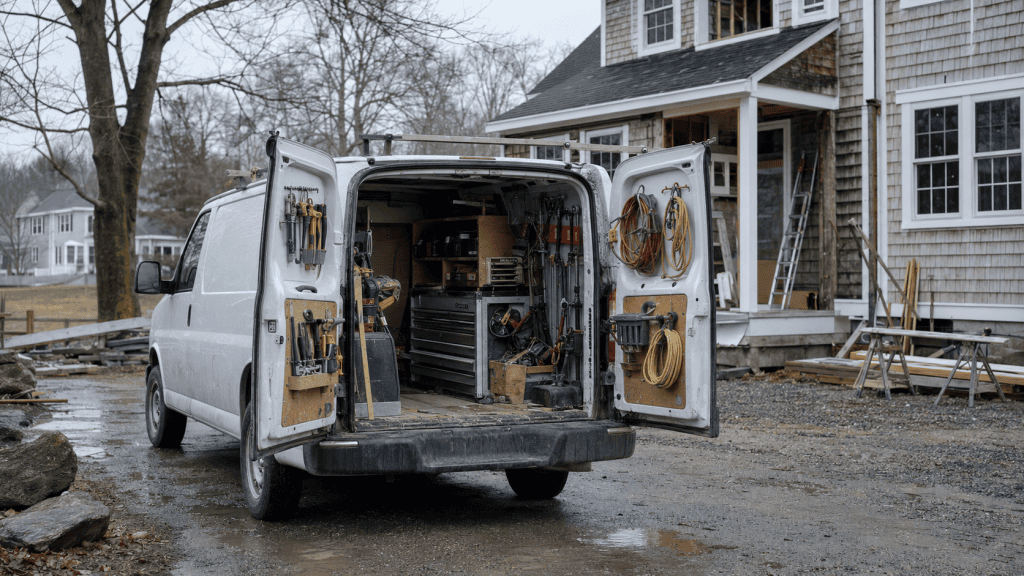
Property coverage generally protects property at the described location. Tools in a van overnight, equipment staged at a job site, and gear in an employee’s garage are all somewhere else.
Contractors are the obvious case, but this catches photographers, caterers, mobile service businesses, and anyone whose valuable stuff travels. If employees own their own tools, understand that your policy probably does not cover employee-owned property at all unless it has been specifically added.
Check for: an inland marine or installation floater, a tools and equipment schedule, and whether employee-owned tools are included or excluded.
7. Actual cash value instead of replacement cost, plus coinsurance
Two settings on your property coverage quietly determine what you actually collect.
The first is valuation. Replacement cost pays what it costs to replace the property today. Actual cash value pays that amount minus depreciation. On a fifteen year old HVAC system, the difference is not small.
The second is coinsurance. If your policy has an 80% or 90% coinsurance clause and you insured the building for less than that percentage of its true replacement cost, the insurer reduces your payout proportionally, including on partial losses. Construction costs have moved substantially in the last few years, so a limit that was accurate in 2020 may now trip this clause.
Check for: “RC” or “ACV” next to your property limits, and the coinsurance percentage. If you have not had a replacement cost valuation done in three or more years, get one.
8. Umbrella limits that do not meet your contracts
Larger clients, general contractors, hospitals, universities, and municipalities all impose insurance requirements. Many now require $5 million or more in combined general liability and umbrella limits.
If you are carrying a $1 million per occurrence GL with a $1 million umbrella, you are not eligible for that work, and you may already be in breach of a contract you signed. Worth noting: increasing an umbrella limit is usually one of the cheapest additional limits you can buy, dollar for dollar.
Check for: your umbrella or excess liability limit, then pull your three largest client contracts and compare against the insurance exhibit.
9. Missing additional insured and waiver of subrogation endorsements
This is the gap that gets certificates rejected.
Client contracts routinely require that the client be named as an additional insured, that the coverage be primary and non-contributory, and that the insurer waive subrogation rights against the client. Those are three separate policy endorsements. Your agent cannot simply type them onto a certificate. If the endorsement is not on the policy, the certificate is inaccurate, and the protection your client thinks they bought does not exist.
Check for: a blanket additional insured endorsement, a primary and non-contributory endorsement, and a blanket waiver of subrogation. Blanket forms are better than scheduled ones because they apply automatically wherever a written contract requires it.
10. Workers compensation classification and uninsured subcontractors
Two problems live here.
First, class codes. Your premium is driven by the classification assigned to each employee. If an employee’s duties changed and the code did not, you are either overpaying or setting up an unpleasant audit adjustment. Owner and officer inclusion or exclusion elections also get made once and then forgotten as ownership changes.
Second, subcontractors. If you hire a 1099 sub who does not carry his own workers compensation, your policy may pick up that exposure at audit, and you will pay premium on those payments as if they were payroll. Worse, if he gets hurt on your job, the claim may land on your policy.
Check for: your class codes against what people actually do, your officer election, and whether you collect a current workers compensation certificate from every subcontractor before they start.
What to do with your list
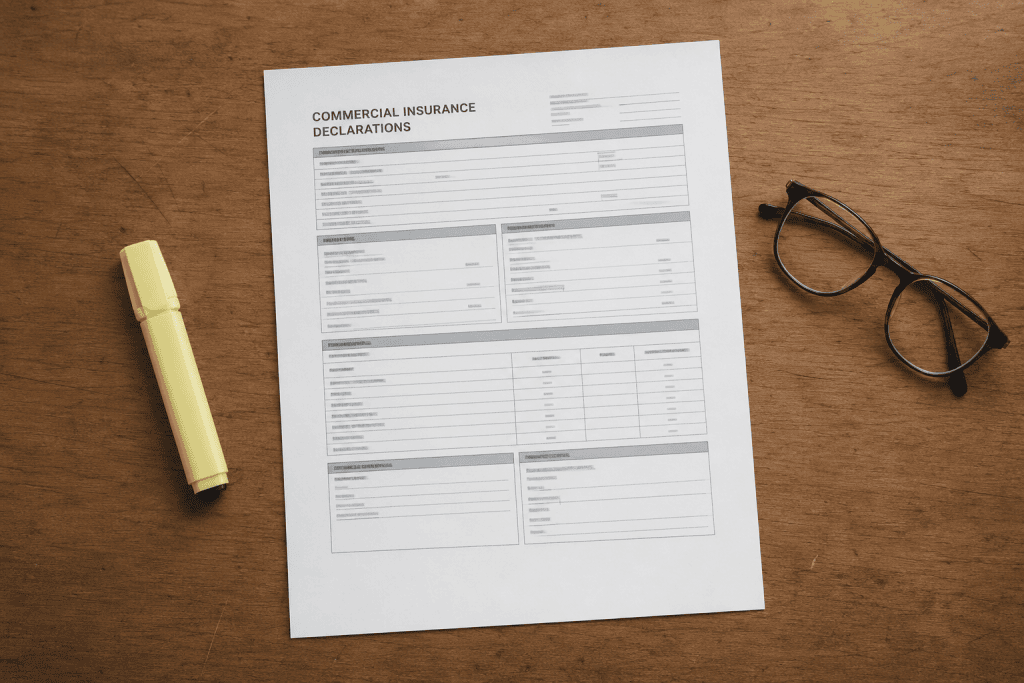
Coverage varies meaningfully between carriers and policy forms, so the language on your specific declarations page is what governs, not a general article. Use this as a list of questions rather than a set of conclusions.
If you found two or three items you cannot answer, that is normal, and it is a good reason to have someone read the actual policy rather than the summary. Titan Insurance does independent policy reviews for Massachusetts small businesses at no cost. We will read what you have, tell you plainly where the gaps are, and tell you when your existing coverage is fine, which happens more often than you might expect.



